

INTRODUCING
The Art of REPAIR
virtual self paced course
Learn the 6-step REPAIR process to navigate conflict, rebuild trust, and create more secure, connected relationships at your own pace
Does this feel familiar?
You want to communicate better.
You’ve tried.
But somehow…
You end up in the same arguments and patterns again and again.

You replay conversations in your head
Thinking of what you should have said
Or what you’ll say next time
You shut down… or go quiet to keep the peace
But inside, resentment builds
Or you finally speak up… and it comes out sharper than you meant
Now you’re dealing with the conflict and the aftermath
You feel misunderstood, even when you’re trying your best
Like you’re speaking… but not actually being heard
You try to explain your feelings… and it turns into defensiveness or blame
And suddenly you’re further apart than when you started
You start questioning yourself
“Am I too much?”
“Am I not communicating clearly?”
“Why does this keep happening?”
And maybe the hardest part…
You care about this relationship.
You don’t want to keep hurting each other.
But you don’t know how to actually repair when things go sideways.
Here’s the truth:
Most of us were never taught what to do after conflict happens.
So we default to:
Avoiding
Escalating
Shutting down
Or trying to “talk it out” without a real structure
And none of that actually rebuilds trust.

This is where things start to change.
What if conflict didn’t mean disconnection…
But became a path back to each other?
What if you knew exactly what to do in the moment it matters most?
WHAT IS
THE ART OF REPAIR?
The Art of REPAIR is a 6-step methodology that helps you turn rupture into reconnection.
Because conflict isn’t the problem.
Not knowing how to repair is.
Instead of guessing what to say, shutting down, or going in circles, you’ll learn how to:
Regulate your nervous system so you can stay present
So you don’t say things you regret, shut down, or escalate the situation.
When you’re grounded, you can actually hear and be heard.
Understand each other’s reality instead of arguing over who’s right
So you stop having the same conversation on repeat.
When both realities are understood, defensiveness drops and connection becomes possible.
Communicate impact with clarity
So your feelings actually land, instead of getting dismissed, minimized, or misunderstood.
This is where people finally feel seen.
Restore trust with meaningful repair
So it’s not just “I’m sorry” and move on.
You learn how to rebuild trust in a way that actually sticks.
At its core, this work turns conflict into a doorway to deeper connection.
INSIDE THIS COURSE,
YOU’LL LEARN HOW TO:
Stay grounded instead of reactive in conflict
So you stop defaulting to shutdown, attack, or avoidance
Slow conversations down before they escalate
Because going too fast is one of the biggest reasons conflict gets worse, not better
Create shared reality, even when you disagree
So you stop arguing about what happened and start understanding each other
Express your feelings and needs clearly
Without blame, spiraling, or walking on eggshells
Take responsibility without collapsing into shame
So accountability actually builds trust instead of shutting things down
Repair in a way that actually rebuilds trust
Not surface-level apologies, but real change people can feel
Return to connection again and again
Because repair is not a one-time event, it’s a lifelong relational skill
“This workshop has the potential to impact you for the rest of your life if you are willing to be an open and curious Student. There is so much to learn, and this process makes it easy and accessible to apply new ideas and concepts in practical ways so that you feel confident to go out into the world and practice repair right away.”
— Art of REPAIR Participant
WHAT MAKES THIS DIFFERENT
This is not just another communication course.
Most communication tools fall apart the moment you’re triggered.
This is different because it works when it actually matters.
Structured
You’re not left guessing. You’ll know exactly what to do, even in high-stress moments.
Trauma-aware
We work with your nervous system, not against it
Because if your body is flooded, no communication tool will work
Skill-based
You don’t just understand it intellectually
You practice it until it becomes natural
Built for real life
This works in the middle of arguments, not just in theory
Yes! I’m ready to enroll!
WHO THIS IS FOR
This course is for you if:
You keep having the same conflict on repeat and nothing changes
You either avoid conflict… or go too hard when you finally speak up
You want deep, honest connection, not surface-level peace
You’re willing to look at your part, without taking on all the blame
You want tools that actually work in real conversations, not just in your head
It’s not your fault.
You weren’t taught how to do this.
And neither were the people who raised you.
Most of us learned to:
Avoid
Explode
Shut down
Or stay stuck in resentment
But conflict doesn’t have to break your relationships.
With the right skills, it can actually strengthen them.
You can learn this.
WHAT'S INCLUDED
MODULE BREAKDOWN
Lifetime Membership
To over 10 hours of Online Learning plus Integrative Exercises to practice the skills
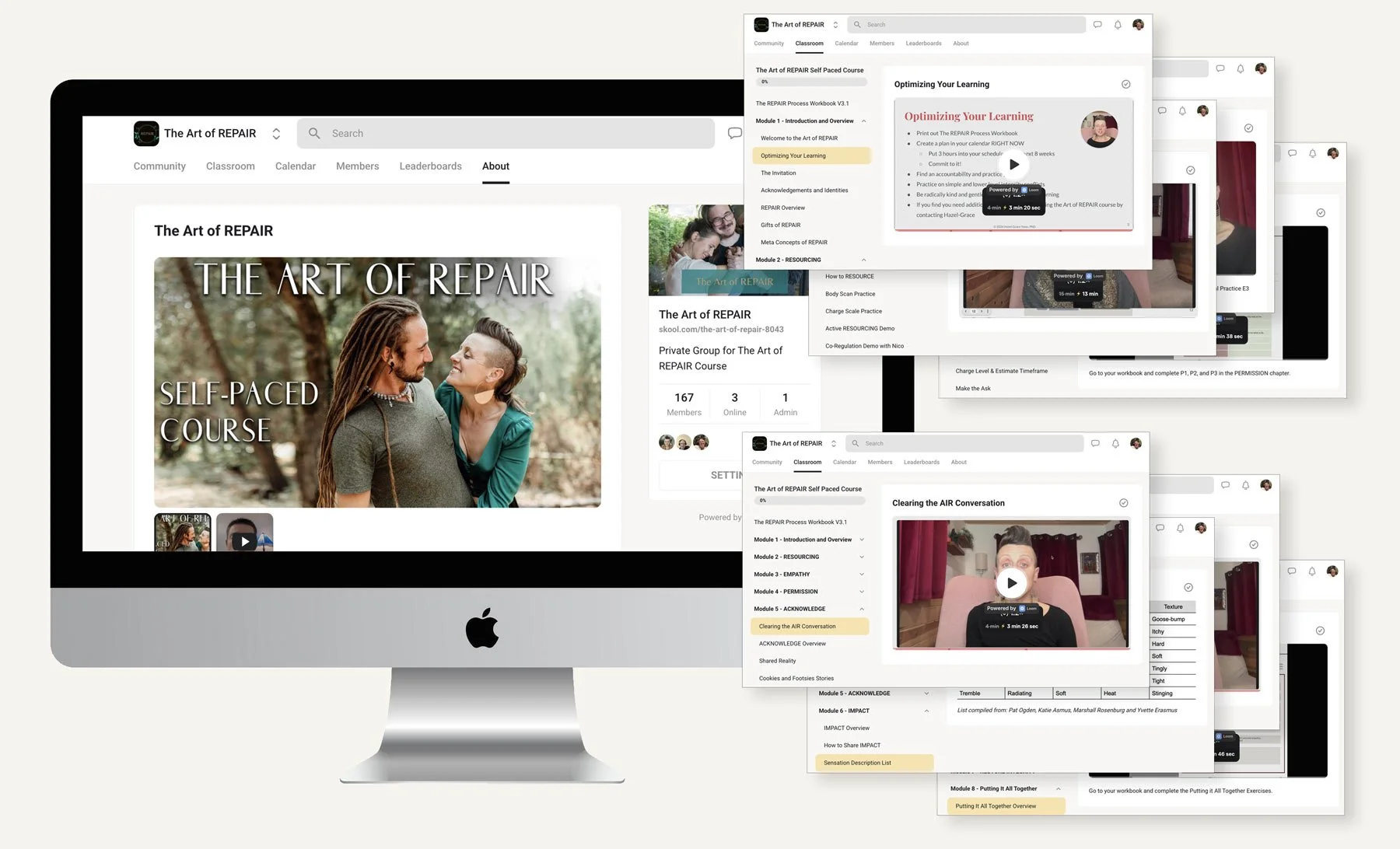
MODULE 1:
Foundations of Repair
Understand why conflict feels so hard
→ So you stop thinking something is wrong with you or your relationship

MODULE 2:
Resourcing
Regulate your nervous system
→ So you can think clearly and stay connected instead of reacting

MODULE 3:
Empathy
Explore self-compassion and curiosity
→ So you can validate your experience and soften your assumptions before the conversation

MODULE 4:
Permission
Learn how to start hard conversations
→ So people don’t feel blindsided, and actually say yes to the conversation

MODULE 5:
Acknowledge
Create shared reality
→ So you stop arguing about what happened and finally get on the same page

MODULE 6:
Impact
Express and hear impact
→ So both people feel deeply seen and understood
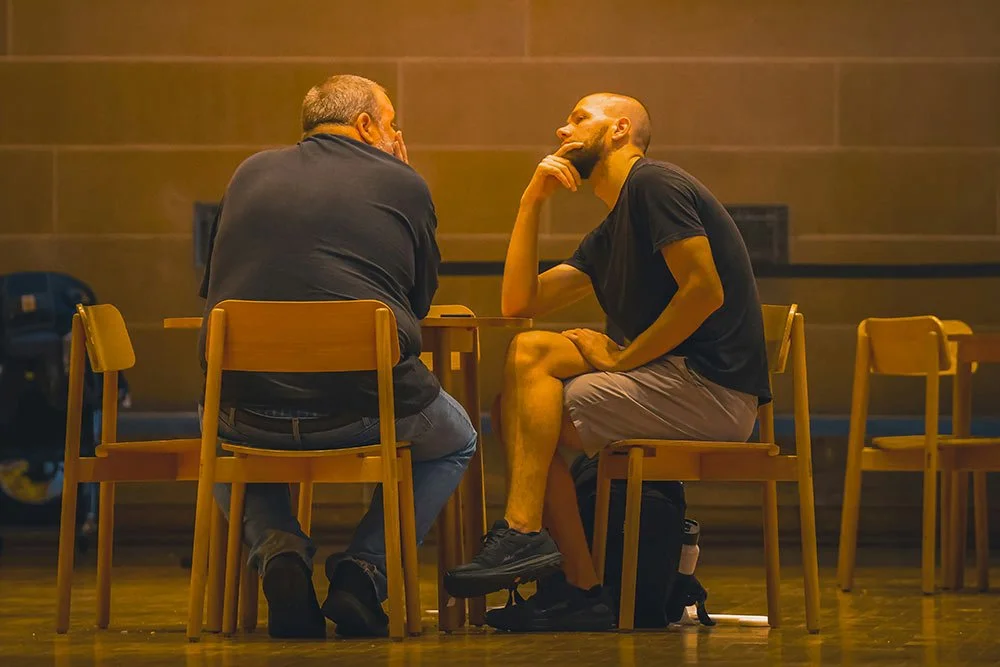
MODULE 7:
Restore Integrity
Rebuild trust through action
→ So the relationship actually heals, not just “moves on”

MODULE 8:
Integration & Practice
Apply the full process
→ So this becomes how you relate, not just something you learned once

BONUSES
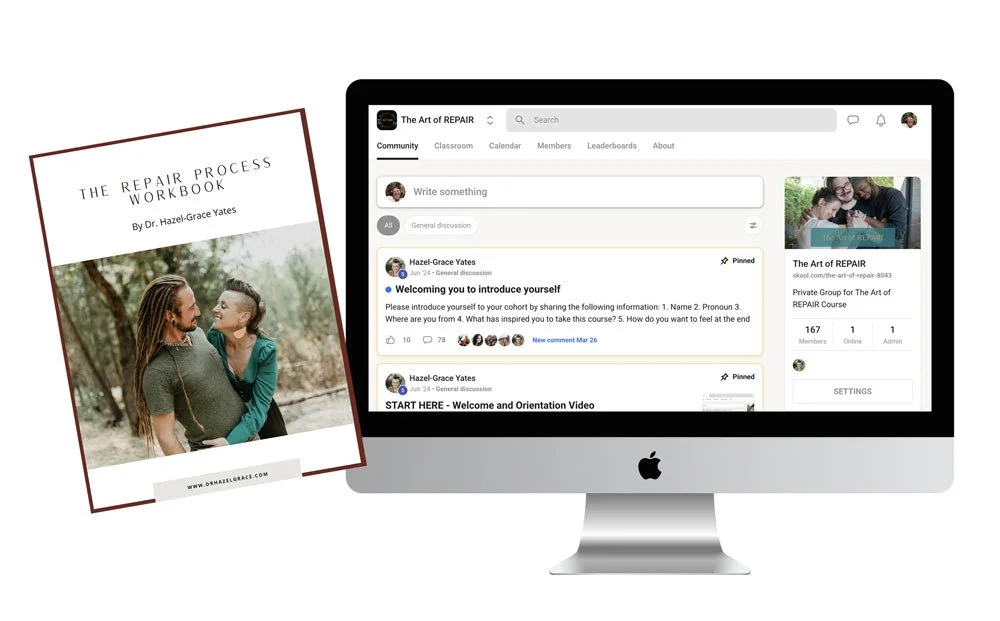
75-page REPAIR Workbook PDF
25+ guided exercises to help you integrate the work into real-life situations
Online Community Space
Practice, ask questions, and stay supported as you build these skills
Yes! I’m ready to enroll!
Frequently Asked Questions
-
Yes. This course is designed to support you in real, ongoing relationships. You’ll learn skills you can apply immediately with a partner, family member, friend, or colleague.
-
Absolutely. These skills apply to all relationships, including future ones. This is foundational work you carry with you for life.
-
You can still benefit deeply from this course. When you change how you show up, it often shifts the dynamic. And even when it doesn’t, you’ll have more clarity, confidence, and choice in how you respond.
-
You don’t need to be.
This course gives you a clear structure to follow, so you’re not relying on natural ability or guessing what to say.
-
You’ll receive lifetime access. The course includes approximately 10 hours of content, and you can move through it at your own pace and return to it anytime.
-
Yes. Many people who come to The Art of REPAIR have already done years of therapy, personal growth work, communication trainings, mediation, or conflict resolution work. One of the most common things we hear is:
“I had collected a lot of relational tools over the years, but this framework finally connected the dots.”
People often already have many of the skills. What they’ve been missing is a clear, repeatable structure for how to apply them in real-time conflict, especially when emotions are high.
The Art of REPAIR helps people slow down, stay grounded, and know what comes next instead of grasping for the “right” thing to say in the moment. Many students say the structure and sequence of the process is what makes the difference.
-
Most communication tools focus on what to say.
This course teaches you how to repair.You’ll learn a step-by-step process that integrates nervous system awareness, shared reality, and meaningful repair, so you can actually stay connected during conflict.
-
That’s a normal part of learning to navigate conflict.
This course is trauma-aware and includes tools to help you regulate and go at your own pace. You’re encouraged to slow down and take care of yourself as you engage.
-
Yes. These skills apply to romantic relationships, family, friendships, and professional dynamics.
-
It takes an average of 10 hours to complete. This includes watching the trainings and doing the practice exercises. You may desire to spend more time with the material.
Yes! I’m ready to enroll!
Guarantee
If you fully engage with the course and don’t experience a meaningful shift in how you understand, navigate or approach conflict, reach out within 30 days and you will receive all of your money back.
This work is powerful, and it asks something of you.
If you’re willing to show up, I stand behind the results.
WANT TO LEARN MORE?
In this free 20 minute video you will get an overview of the 6-step REPAIR Process created to transform conflict into deeper trust and connection.
You are invited to explore your own feelings about conflict and journal about the potential benefits of developing solid repair skills in your relationships.
WHAT PEOPLE ARE SAYING ABOUT